
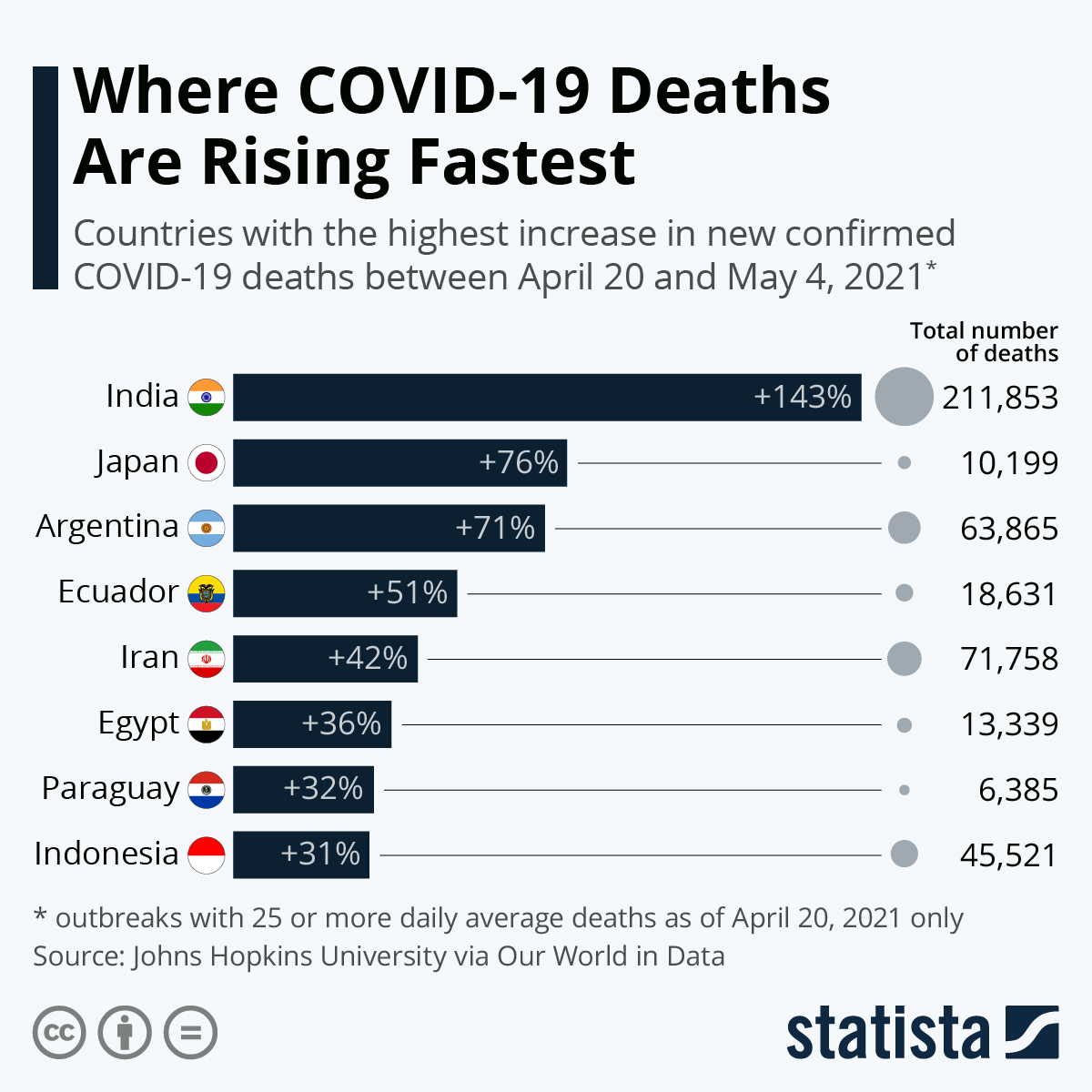
India’s transition from a vaccine exporter to a vaccine importer is the perfect opening chapter for any literature on pandemic mismanagement.
Highlights
- India has gone from recording one of the lowest cases in March to accounting for nearly half of the global new cases every day in May.
- With an urgent need to provide mass inoculation, India is facing an acute vaccine supply shortage expected to go on till July.
- The obvious way for India to get out of ‘Covid Hell’ is to ramp up the nationwide vaccination drive alongside vaccine production.
- India’s vaccine czar Adar Poonawalla has said the India government will need Rs. 80,000 crore to vaccinate the population.
The first Covid-19 wave hit India around January 2020. Its impact was recorded by a study that showed over 7000 cases that month and over 200 fatalities. It was felt that people themselves were the main carriers and their movement from one place to another was the main cause of Covid-19 spreading, Therefore, the government ordered the shutdown of almost all transportation systems right away, except for skeleton services required for emergencies.
In 2021, with the world and India are reeling under its second wave. There are millions of cases erupting and thousands losing their lives daily. Despite this fact, many are still not taking this highly infectious and dangerous virus seriously foregoing the recommended precautions. On the other hand, the Indian government’s Covid-19 policy went horribly wrong.
You will find more infographics at Statista
Adjusting to a new way of life
From time to time, Prime Minister Narendra Modi has addressed the nation and encouraged the Indian citizens to continue the fight against Covid-19. To control the spread, at times the government has had to declare a lockdown of all but essential services. Weekend curfew has also sometimes been declared to ensure that people stay at home as much as possible.
Lockdown and even curfew declarations made it difficult for people to get to shops for their daily needs or even to chemists for urgently required medicines. It was during these times that home delivery gained importance. Simultaneously, the internet came to the rescue of all sections of society. Soon schools started online classes, business meetings were held on Zoom, and even doctors were consulted online – not just for Covid-19 infections, but for countless other diseases.
It was a do-or-die situation. The entire country became a cluster of containment zones. At the same time healthcare professionals were working tirelessly in hospitals and clinics, catering to the ever-increasing number of patients. To safeguard the health workers the government started the process of vaccinating them.
Then on the 19th of January 2021, Prime Minister Narendra Modi tweeted with pride that India had sent vaccines to some other countries in need of the same.
Where did India go wrong?
Around March 2021, India’s Covid-19 policy was outwitted by the virus. It was hit by the second wave of Covid-19 like a tsunami, affecting both rural and urban areas. This has enormously increased the demand for healthcare facilities. Hospital beds, oxygen, nurses, and even doctors are in short supply. In some places, the vaccination drive undertaken by the government had to be stopped as there were no vaccines available.
Over the last few months, other countries such as the US and the UK were trying to collect supplies of various vaccines. However, the Indian government came across as complacent and apathetic to the urgent immunization needs to 1.3 billion people. It focused only on two vaccines – Oxford-Astra Zeneca vaccine under the proprietary name Covishield and the homegrown Covaxin. Only now has it decided to approve more vaccines starting with Sputnik V.
Likewise, reports claim that vaccine orders for India arrived late. The vaccination drive in India all but started on January 16, 2021. But keeping in mind the scenario of Covid-19 cases, the country needed to vaccinate much before January. Indian government might now have ramped up orders and approved more foreign vaccines but it will take months to make these vaccines accessible to the people of the country.
All this has brought up many new challenges to be faced by India. To go forward the government needs to focus on:
- Increasing government efficiency
- Promoting gender equality
- Clearing bank loans
- Improving infrastructure
- Increasing productivity
- Ensuring well paid job opportunities
An Economic and Civic Upheaval
The economic impact of Covid-19 can be seen on all aspects of the economy; it depends on factors like shrinkage of GDP, unemployment, demand and supply chain, and aviation. But it also comes from the uncalculated and conveniently ignored micro-economics of the country. People were forced to live off depleting savings in a year of lockdown and no incomes. Now more many, the savings are over and they have been confronted by a viral infection on rampage. This pandemic has come along with a terrible economic crisis, perhaps the worst Indians have faced in the history of the young country.
In the middle of May 2020, after the declaration of the financial package, India’s GDP had decreased. In September, the Ministry of Statistics declared the figure of GDP which declined 24 percent from the same time the previous year. The Economic Index fell down from 82.9 on 22nd March to 44.7 on 26th April.
Sadly, by April 2021, India had become a large vaccine importer from being a vaccine exporter. Government needs to back vaccine makers to increase the production of Covid-19 vaccines as soon as possible.
The post Vaccine, Oxygen, Economy: India In The Grips Of An Acute Policy Paralysis appeared first on DKODING.
from https://www.dkoding.in/newsline/vaccine-oxygen-economy-india-covid-policy-paralysis/
via Dkoding RSS Feed


No comments:
Post a Comment